Very interesting story here, with the classic issues as economies grow - and how profit takes precedence:
"Despite being banned for use in the EU, malathion is still exported by Denmark, France and Germany -- 12.5 tonnes in 2023, according to the European Chemicals Agency."
Reporting by Moses Gahigi, https://uk.finance.yahoo.com/news/rwanda-bees-being-wiped-pesticides-062003132.html
Like the argument over global warming, even though much of the data may be inaccurate or presented in a biased manner, the basic premise could still be correct. At the junction of reason and emotion, choose your route.
Put another way, "I think you'll find it's a bit more complicated than that." [Dr Ben Goldacre]
Bees: Many British pollinating insects in decline, study shows
As reported by the BBC, the study (which you can find here) says:
The "losers" include solitary bees, which live in burrows in the ground, and upland bees, living on mountains and moorlands. Among the "winners" are 22 of the most important crop pollinators.
So a perfectly good headline would also be:
Numbers of important pollinating insects on the rise, study shows
Despite the bizarre use of English in the headline (is it asking us to safeguard our valuable Nature while the rest of it can go to heck?), this seems like a good cause:
PetitionBe fair to Bees, Plan Bee –Help farmers safeguard our valuable Nature!
Young people from Northern Ireland are asking government to support devolved institutions by having a UK wide strategy to provide funding to support farmers delivering valuable ecosystem services, such as providing wildflowers for pollinators.
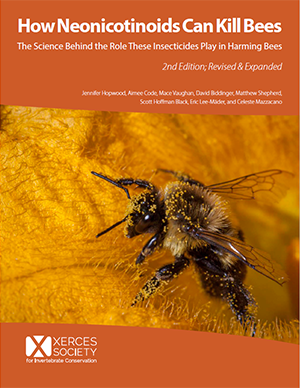
Attempts to find a new generation of pesticides to replace neonicotinoids have been dealt a potential blow.
Neonicotinoids are the most commonly used insecticide in the world, but had been linked to bee declines.
Studies suggest a new type of pesticide seen as an alternative to the chemicals, which have been banned in many countries, may have similar risks.
The new insecticides may reduce bumblebee reproduction in the wild, according to a study by UK scientists.
The alternatives had been sought because of the evidence linking neonicotinoids to declines in bee populations - leading to the bans and restrictions on their use.
Worth listening to the first 22 minutes of this episode of BBC Radio 4's Inside Science show, presented by Dr Adam Rutherford: http://www.bbc.co.uk/programmes/b08wmk5x
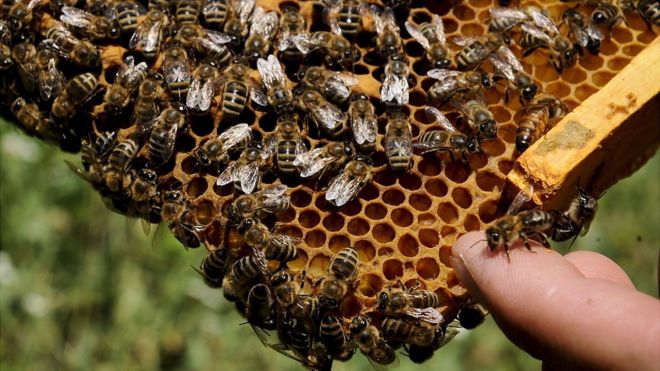
The headline on this story on Independent.ie seems, well, a little over-dramatic. 'Meltdown,' as in a runaway nuclear fission reaction, produces an ugly, hot jumble of radioactive fuel, control rods, moderator and coolant. That sounds a teeny bit more serious than beekeepers losing stocks.